Close your eyes for a moment and think about your own childhood playtime…
What do you remember most?
Was it the cardboard box that became a rocket ship?
The building blocks that turned into castles and cities?
Or maybe mud pies in the backyard bakery?
Chances are, those memories didn’t depend on batteries, screens, or charging cables. They were powered by imagination.
Today, our children are growing up in a world full of gadgets — flashy, noisy, and often designed to entertain automatically. But does entertainment really equal creativity?
Enter open-ended toys — the simple heroes of developmental play.
They don’t do the playing for the child.
They invite the child to take the lead.
Let’s explore why these toys are becoming more essential than ever — especially for young learners.
🧩 What Exactly Are Open-Ended Toys?
Open-ended toys have no single “right” way to use them.
They grow with your child and evolve with their imaginations.
Examples include:
- Wooden blocks
- Play silks
- Loose parts (like shells, stones, beads)
- Pretend kitchen sets
- Stacking rings
- Clay or puzzles
- Art materials
Children can build, pretend, invent, and create entirely new worlds from them.
Every time they play, the result is different.
That’s creativity in action.
📱 And What About Gadgets?
Gadgets usually have:
- One purpose or goal
- A built-in script (the toy tells the child what to do)
- Lights + sounds to grab attention
- Rewards like points or songs
Examples:
- Electronic talking toys
- Tablet games
- Robot pets
- Battery-operated cars
- Virtual reality toys
These can be fun, yes! And sometimes educational.
But they can also make children passive participants, not active creators.
🎭 Imagination vs. Automation — Who’s Leading the Play?
A gadget often says:
“Press this button and watch what happens!”
But open-ended toys say:
“What can you make happen?”
One invites a reaction.
The other invites creation.
That difference is HUGE for brain development.
🧠 What Creative Play Does for a Child’s Brain
Research shows that playful experimentation:
- Builds problem-solving skills
- Strengthens motor development
- Develops flexible thinking
- Encourages confidence and independence
- Supports language and social skills
With open-ended toys, the brain is constantly asking:
- “What if…?”
- “How about…?”
- “Can I try this another way?”
This curiosity becomes the foundation for:
✨ innovation
✨ resilience
✨ lifelong learning
🔋 Why Gadget Play Can Limit Creativity Over Time
Gadgets are designed to:
- Give fast rewards
- Provide exciting instant feedback
- Entertain without effort
Children get used to the toy doing the work:
- The story is already written
- The sounds are pre-programmed
- The outcomes are predictable
They don’t have to think, plan, or imagine.
Eventually, if the toy stops entertaining… they stop playing.
Creativity needs boredom sometimes.
It needs quiet moments.
It needs space to unfold.
🧸 Open-Ended Toys Encourage…
🧱 Problem-Solving
“What can I build so this tower doesn’t fall?”
🎨 Expression
“How do I show my idea using only blocks and cloth?”
🔄 Flexibility
“There’s no rule — so I can change anything!”
🌟 Confidence
“I did this all by myself!”
These toys are like a stage…
…and the child is always the main character.
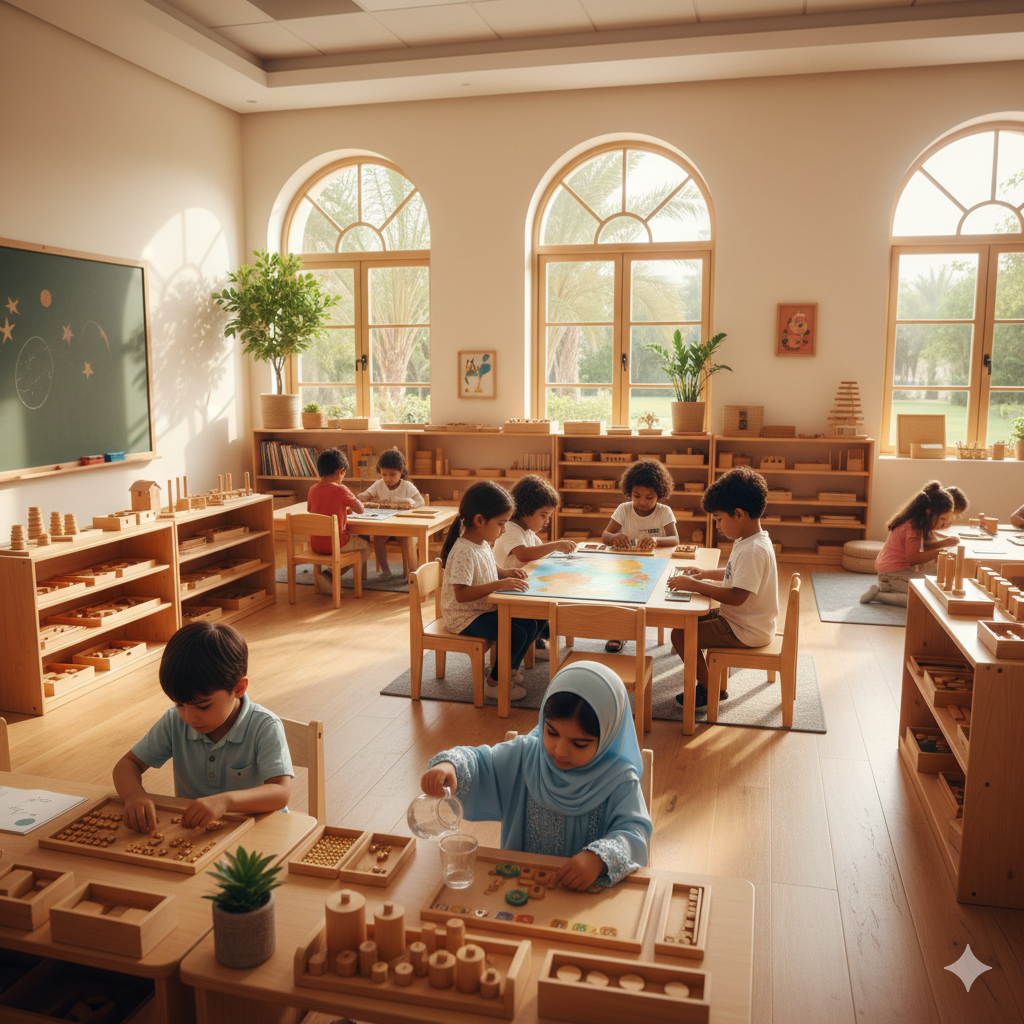
🌈 Montessori & the Magic of Open-Ended Play
Montessori principles focus on:
- Self-direction
- Hands-on learning
- Real-world exploration
- Trusting children with real choices
Open-ended toys fit beautifully into that environment.
They’re simple, purposeful, and invite children to engage deeply.
When kids aren’t distracted by noise or screens, their curiosity shines brightest.
🏠 How to Introduce More Open-Ended Play at Home
You don’t need to replace everything overnight.
A few changes can transform playtime:
✔ Rotate toys every 2 weeks
Old toys feel new again — without buying more.
✔ Display toys neatly on low shelves
Children choose independently when everything is visible.
✔ Choose quality over quantity
One great puzzle > ten flashing toys that children ignore after two days.
✔ Mix toys with household “loose parts”
- Bottle caps
- Cardboard tubes
- Cloth napkins
- Wooden spoons
Everyday objects = endless imagination boosters.
👨👩👧 “But My Child Loves Screens…” (Totally Normal!)
We’re parents living in a digital world — tech is part of our lives.
Screens aren’t the enemy. Mindless screen time is.
Montessori encourages purposeful technology:
- Using apps for creativity (not just consumption)
- Video calls with family
- Watching real-life educational videos
A healthy balance might look like:
- Mornings: hands-on play
- Afternoons: short supervised screen time
- Evenings: calm sensory play
The key is being intentional, not eliminating fun.
🎁 Choosing Toys That Actually Grow With Your Child
Before buying a toy, ask:
- Can it be used in more than one way?
- Will my child still love this next year?
- Does it encourage participation or passive viewing?
- Does it involve movement, exploration, or imagination?
If the answer is yes — it’s worth adding to your home!
Here’s a quick guide:
| Type of Toy | Sparks Creativity? | Lasts Long-Term? | Supports Independence? |
| Open-ended toys | ⭐⭐⭐⭐⭐ | ⭐⭐⭐⭐⭐ | ⭐⭐⭐⭐⭐ |
| Passive gadgets | ⭐⭐ | ⭐ | ⭐ |
🚀 The Long-Term Benefits of Open-Ended Play
Kids who spend more time building imaginary worlds become adults who:
- Think outside the box
- Adapt to new situations
- Make creative decisions
- Handle challenges with confidence
- Work well independently and in teams
That’s not just “play” — it’s preparation for life.
🧩 Real-Life Examples from Parents
📌 A parent shares how blocks helped her toddler:
“My daughter built a bridge for her toy car.
The next day, it became a zoo.
Then a castle — same blocks, different story every time!”
📌 Another parent noticed:
“The tablet kept my son quiet…
But the toy kitchen made him talk, imagine, and negotiate!”
Stories like this repeat everywhere.
Open-ended toys spark more language + social growth.
💡 Try This: Simple Play Invitations
These take less than 5 minutes:
| Setup | What You Need | Play Benefits |
| Mini City | Blocks + toy cars + cloth | Problem-solving + creativity |
| Nature Basket | Leaves, stones, twigs | Sensory + exploration |
| Color Sorting | Bowls + pom poms or crayons | Math + focus |
| Pretend Cafe | Cups + plates + snacks | Language + independence |
| Art Corner | Paper + crayons + tape | Self-expression |
No downloads needed. 😄
🧘 Mindful Parenting Tip
If your child says:
“I’m bored!”
That’s actually where creativity begins.
Give space. Don’t rush in with a screen.
Let them invent their own fun.
You’ll be amazed at what they come up with.
🎯 Final Thoughts: Which Toys Truly Matter?
Open-ended toys help children:
- Think
- Imagine
- Problem-solve
- Lead the play
- Stay curious
Gadgets are exciting…
but creativity doesn’t come from pressing buttons.
It grows when children:
- Ask questions
- Try new ideas
- Build something from nothing
So yes, screens and tech have a place in modern life — but real play builds real brains.