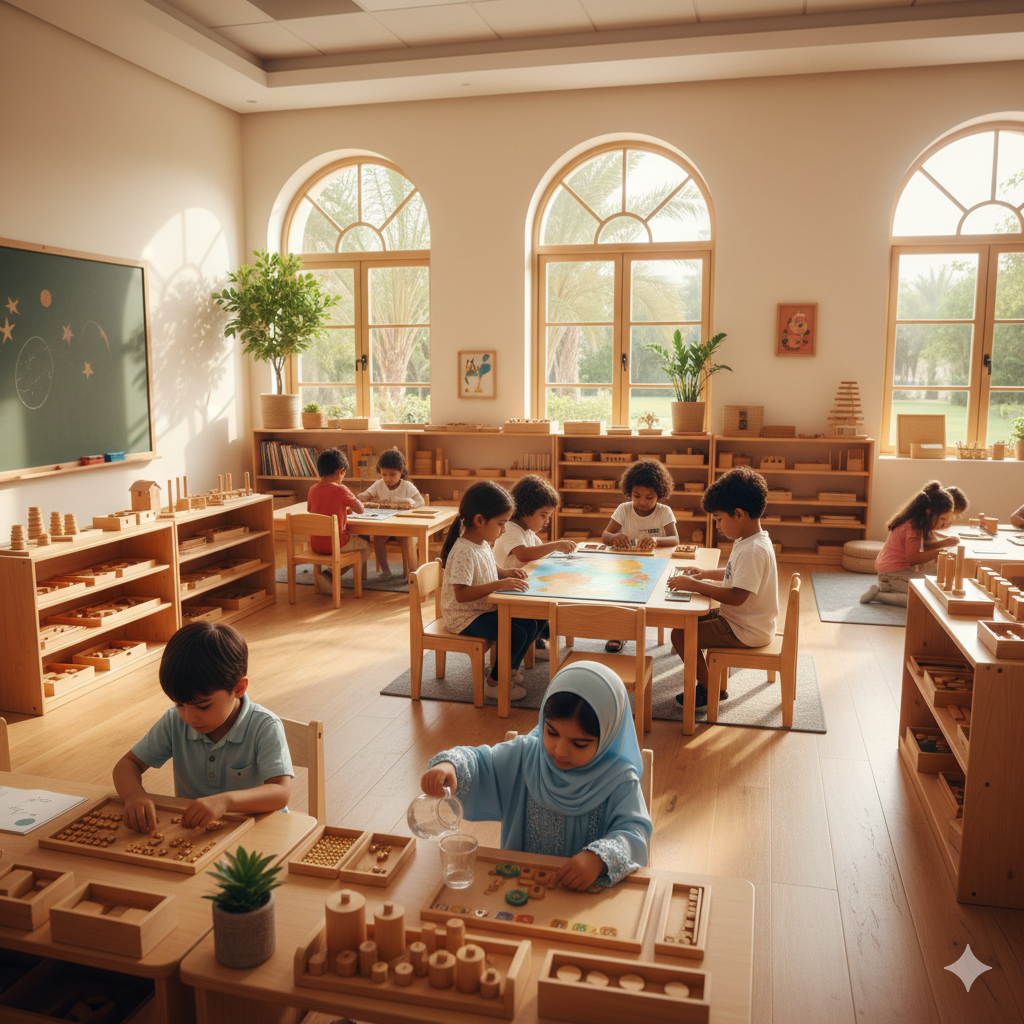
Introduction: The Shift From Screens to Sensory Play
In a world buzzing with technology, parents are starting to crave something different for their children — something real. More families are stepping away from constant digital exposure and rediscovering the power of hands-on, immersive activities.
This shift isn’t just nostalgic; it’s evidence-based. Research shows that sensory engagement — touching, building, exploring, moving — activates multiple areas of a child’s brain, leading to better retention, creativity, and emotional regulation.
And that’s exactly what Montessori-style play has always stood for.
As we move into 2025, Montessori-inspired hands-on learning is no longer seen as an “alternative” — it’s the future of early education.
1. What Makes Immersive Play So Powerful?
Immersive play engages a child’s body, mind, and emotions simultaneously. When a child mixes colors, transfers beans, or builds a tower, they’re not just “playing” — they’re developing concentration, coordination, and independence.
In Montessori settings, this is known as purposeful play — where every activity, from pouring water to sorting objects, serves a developmental goal.
Key benefits include:
- Deep focus and mindfulness in children
- Enhanced fine motor and problem-solving skills
- Increased confidence through self-led exploration
- Real-world understanding through tactile experiences
Unlike passive screen-based learning, immersive activities require active participation — and that’s where true learning begins.
2. The Science Behind Hands-On Learning
Modern neuroscience supports what Montessori observed over a century ago. Studies from the American Academy of Pediatrics show that kinesthetic (movement-based) learning enhances brain connectivity and cognitive growth in early childhood.
When children use their hands, they stimulate both hemispheres of the brain. This leads to stronger neural pathways associated with memory, reasoning, and language.
In essence, hands-on learning wires the brain for life-long curiosity.
3. Montessori Meets Modern Innovation
Montessori-style play is timeless, but how it’s implemented in 2025 looks a little different. Many Montessori-inspired parents and educators are now integrating modern elements like:
- STEM-based tactile kits that combine building and experimentation
- Augmented reality (AR) sensory tables, where digital and physical worlds meet
- Outdoor learning hubs promoting sustainability and nature exploration
- Cultural immersion projects encouraging global awareness through crafts and storytelling
This balance between tradition and technology keeps Montessori learning relevant and exciting for modern families.
4. The Role of Parents in Immersive Learning
In Montessori philosophy, adults are guides, not directors. The same applies at home. Parents can encourage immersive play by:
- Setting up a prepared environment with child-accessible materials
- Providing freedom within limits, allowing choice and independence
- Using real-life tools — small brooms, pitchers, or kitchen utensils — to build confidence
The goal is to create opportunities for discovery, not to over-instruct.
Remember, children learn best when they feel trusted and respected as capable learners.
5. Hands-On Activities to Try at Home
Here are a few Montessori-inspired, hands-on activities for today’s children:
- Sensory Bins: Fill trays with rice, lentils, or sand for scooping and sorting.
- Practical Life Tasks: Let your child water plants, fold napkins, or prepare snacks.
- Nature Walk Journals: Collect leaves or stones and draw or classify them later.
- DIY Science Experiments: Explore cause and effect with baking soda volcanoes or magnets.
- Creative Construction: Use recycled materials to build simple structures or “machines.”
These activities don’t require expensive toys — just curiosity and consistency.
6. Why Immersive Play Builds Emotional Intelligence
Beyond academics, immersive play teaches empathy, patience, and resilience. When children work on a long project, face challenges, or collaborate with peers, they learn emotional control and social cooperation.
Montessori classrooms emphasize grace, courtesy, and self-regulation — qualities that stem directly from experiential learning.
7. The Future of Montessori-Style Play
As education evolves, the Montessori philosophy continues to influence modern pedagogy worldwide. The future lies in hybrid learning environments — where digital tools support, not replace, real-world experiences.
Immersive, hands-on learning will remain central to raising confident, adaptable, and compassionate children in the years to come.
Conclusion
The Montessori principle of “learning by doing” has never been more relevant. In an age dominated by screens, immersive play reminds us that real growth happens through touch, movement, and discovery.
Parents and educators alike are realizing that the path to a mindful, capable child begins not on a tablet — but on the play mat, in the garden, and at the kitchen sink.